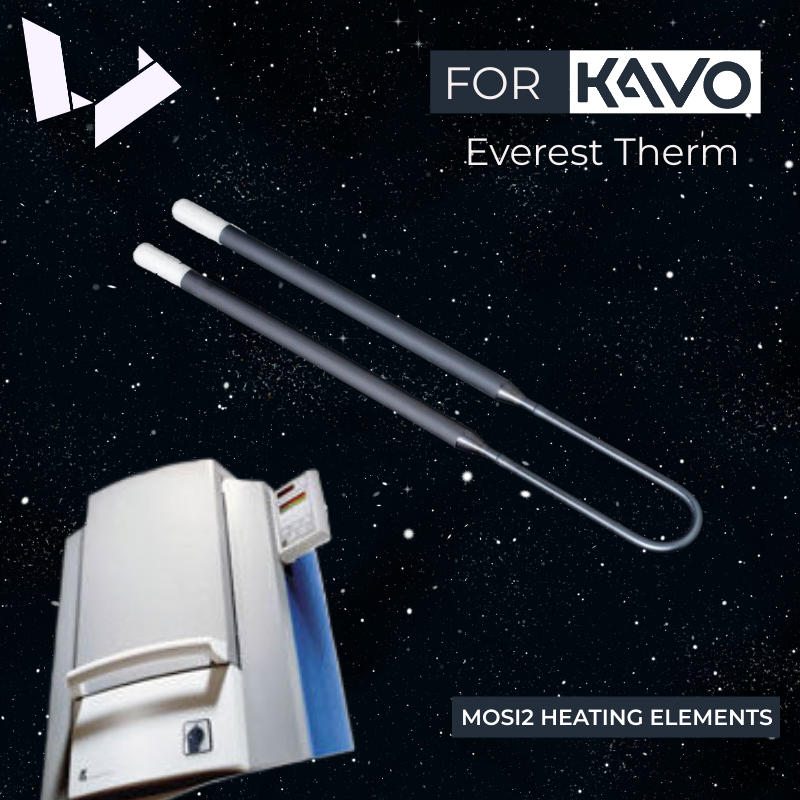


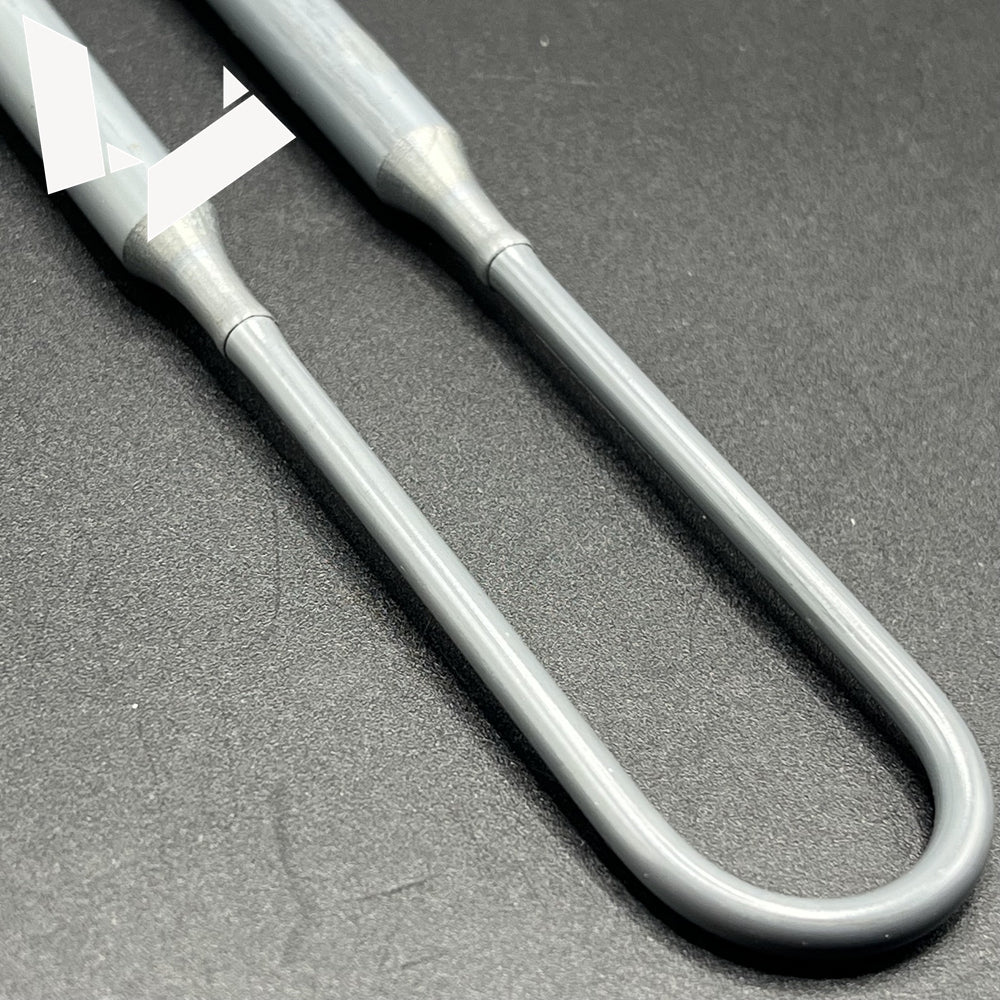


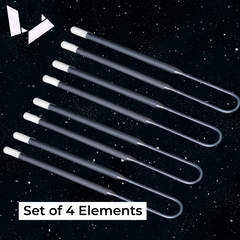
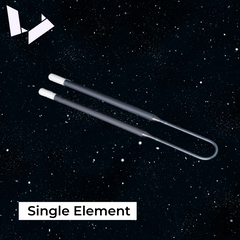
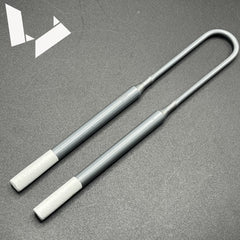
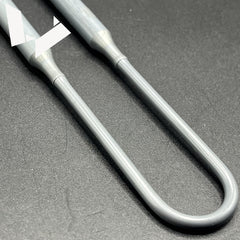
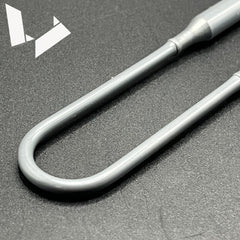
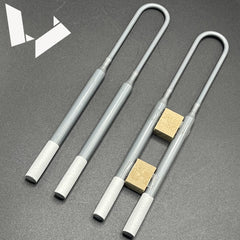
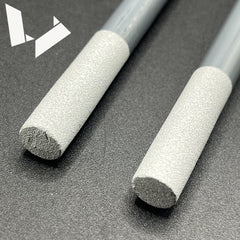
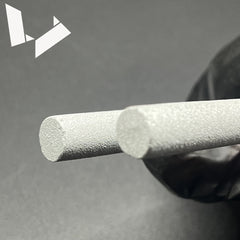

Mosi2 Heating Rods for KAVO Everest Therm Zirconium Sintering Oven Dental Furnace
Compatible Model: KAVO Everest Therm
Production Time: 3-10days
Quantity: Set of 2 Elements / Set of 4 Elements / Single Element
Reference Measurement:
EDT: 15-30days for standard shipping / 3-10days for UPS/DHL/FedEx/TNT express shipping
Technical Data
Technical Specifications
Precision-engineered MoSi₂ heating elements for demanding high-temperature applications
Core Physical Properties
Density
5.8 g/cm³
High-density construction for durability
Bending Strength
350 MPa
Superior mechanical resistance
Hardness
12.0 GPa
Exceptional wear resistance
Compression Strength
650 MPa
Withstands high mechanical loads
Thermal Elongation
4%
Predictable thermal expansion
Fracture Toughness
4.5 MPa·m½
Crack propagation resistance
Porosity
±5%
Controlled structure for consistency
Water Absorption
0.6
Low moisture sensitivity
Self-Protecting Oxidation System
Intelligent High-Temperature Protection
At elevated temperatures in oxidizing environments, MoSi₂ elements form a dense SiO₂ (quartz) protective layer that acts as a self-healing barrier against further oxidation. This unique property extends element lifespan significantly.
✓
Below 1700°C: Dense protective layer maintains structural integrity
✓
Above 1700°C: Layer melts but regenerates during continued use
✓
Result: Up to 3× longer service life vs. traditional heating elements
!
Critical Temperature Range Warning
DO NOT operate continuously between 400°C – 700°C. This temperature range causes accelerated oxidation that can rapidly degrade the element. For applications requiring operation in this range, contact our technical support team for alternative solutions or intermittent operation protocols.
Operating Temperature Limits by Atmosphere
Maximum safe operating temperatures vary based on furnace atmosphere. Select the appropriate element type for your application.
| Atmosphere Type | BR1700 Series Working temp: 1600°C |
BR1800 Series Working temp: 1700°C |
Rating |
|---|---|---|---|
| Air | 1700°C | 1800°C | Optimal |
| Inert Gas (He / Ar / Ne) | 1650°C | 1750°C | Excellent |
| SO₂ | 1600°C | 1700°C | Good |
| CO / N₂ | 1500°C | 1600°C | Moderate |
| Wet Hydrogen | 1400°C | 1500°C | Limited |
| Dry Hydrogen | 1350°C | 1450°C | Restricted |
Typical Applications
Ceramic Sintering
Advanced ceramics, porcelain, technical ceramics up to 1800°C
Glass Processing
Glass melting, annealing, and heat treatment operations
Metal Heat Treatment
Sintering, brazing, and high-temperature metal processing
Crystal Growth
Single crystal growth, epitaxial processes
Laboratory Testing
Research furnaces, material testing, thermal analysis
Powder Metallurgy
Metal powder sintering, additive manufacturing post-processing
Product Advantages
Why Choose Our MoSi₂ Elements
Industry-leading performance backed by advanced manufacturing technology
1
Self-Healing Protection System
Unique auto-repair mechanism through SiO₂ layer regeneration. Unlike conventional heating elements, our MoSi₂ elements automatically form a protective oxide layer that shields against oxidation damage, even after thermal cycling.
Your Benefit: Up to 40% longer service life compared to standard elements. Reduces replacement frequency and maintenance downtime.
2
Precision Engineering & Customization
Heat-molded manufacturing process ensures consistent dimensions and structural integrity. Our advanced production line can create custom geometries and sizes to match your exact furnace specifications.
Your Benefit: Perfect fit guaranteed. Custom sizes available with just 3-day lead time. No costly furnace modifications required.
3
Reinforced Joint Construction
Proprietary joint molding technology with reinforced welding creates exceptional impact resistance. Our elements withstand thermal shock and mechanical stress far better than traditionally-manufactured alternatives.
Your Benefit: 60% fewer breakages during installation and operation. Significantly reduces costly emergency repairs.
4
Superior Energy Efficiency
High-density construction (5.8 g/cm³) with optimized electrical conductivity delivers rapid heating rates while minimizing power consumption. Achieves target temperature 25% faster than conventional elements.
Your Benefit: Lower electricity costs and faster production cycles. Typical savings of 15–20% on energy bills.
5
Flexible Element Mixing
Industry-exclusive compatibility feature allows new and aged elements to operate together seamlessly. Our standardized resistance profiles ensure balanced heating even with mixed-age installations.
Your Benefit: Replace only failed elements instead of complete sets. Reduces emergency replacement costs by up to 70%.
6
Continuous Operation Ready
Engineered for 24/7 industrial operation in oxygen-rich atmospheres. Stable performance across the entire temperature range with minimal degradation over time.
Your Benefit: Reliable continuous production. Proven track record of 2000+ hours service life in demanding applications.
Performance Metrics at a Glance
⚡
25%
Faster Heating
vs. standard elements
💰
15–20%
Energy Savings
Lower operating costs
🛡️
40%
Longer Lifespan
Extended service life
🔧
60%
Fewer Breakages
Reduced maintenance
⭐ Exclusive Compatibility Advantage
Our MoSi₂ elements feature standardized resistance profiles that allow new and used elements to work together harmoniously. This means you can replace individual failed elements without purchasing complete sets — a feature virtually unmatched in the industry.
Real-world impact: A typical 6-element furnace requiring one replacement saves $800–1,200 per incident compared to full-set replacement. Over a furnace's lifetime, this flexibility saves thousands in maintenance costs.
Setup & Maintenance
Installation Guide
Follow these critical procedures to ensure optimal performance and maximum element lifespan
🚨
Safety First: Pre-Installation Requirements
Before beginning installation: Ensure power is completely disconnected. Verify furnace is at ambient temperature. Wear appropriate PPE including heat-resistant gloves and safety glasses. MoSi₂ elements are brittle at room temperature — handle with extreme care to prevent breakage.
1
Vertical Mounting Configuration
Critical Principle: MoSi₂ elements must always be mounted vertically, suspended from the furnace top using dedicated element holders. This is non-negotiable for proper operation.
▸ Why Vertical Mounting?
MoSi₂ exhibits dramatically different properties at different temperatures:
Room TempBrittle
Operating TempPlastic
Vertical suspension eliminates direct mechanical stress on the heating zone. If mounted horizontally or at angles, thermal expansion and gravitational forces cause premature fracture at hot spots.
Pro Tip: Use a level during installation to ensure perfect vertical alignment. Even 5–10° deviation can reduce element life by 30–40%.
▸ Installation Procedure
1. Position element holder at designated furnace roof location
2. Lower element through roof opening until heating zone is fully inside chamber
3. Secure element in holder — finger-tight only at this stage
4. Verify element hangs freely without touching furnace walls
5. Check vertical alignment with plumb line or level
2
Element Holder & Wire Clip Setup
The element holder is the sole structural support for the entire element assembly. Proper configuration is critical for safe, reliable operation.
▸ Initial Strap Tension
Important: Do NOT fully tighten the retaining strap during cold installation. The element needs room to expand as it heats up and transitions to its plastic state.
Tightening Schedule: Initial installation = finger tight only. After first heat-up to 800–1000°C = tighten to secure. The material's plasticity at temperature prevents breakage from compression.
▸ Wire Clip Specifications
The wire clip conducts current to the element and must be carefully managed to prevent overheating:
Max Clip Temp200°C
Contact Voltage< 0.1V
Min Distance50mm
▸ Current Capacity Guidelines
Operating beyond recommended current limits causes excessive heat generation and premature failure:
Φ6/12 Elements≤ 170A
Φ9/18 Elements≤ 300A
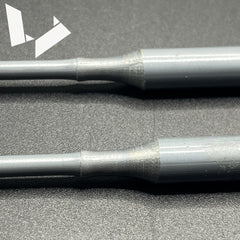
Critical: The tapered transition section at the element's lower end MUST extend into the furnace chamber. If left outside, this area will overheat due to concentrated current density, causing rapid failure.
3
Connection Strap Assembly
Proper connection strap installation ensures reliable electrical contact while accommodating thermal expansion during operation.
▸ Strap Material & Construction
Use only aluminum braid strap or multi-layer aluminum foil as specified:
Aluminum braid: Preferred for high-current applications (>200A)
Multi-layer foil: Suitable for standard applications, easier to form
Never use: Copper straps (galvanic corrosion), steel wire (insufficient conductivity)
▸ Connection Points
Element End: Strap wraps around the cold end of the MoSi₂ element above the furnace roof
Bus Bar End: Strap connects to main power bus bar using mechanical clamp
Important: The external clamp/fastener is for mechanical retention only — NOT for electrical conduction. Current flows through the aluminum braid/foil material.
▸ Length Calculation
Strap length should be 10–15% longer than the straight-line distance between element and bus bar. This extra length provides:
Flexibility for thermal expansion (element grows ~4% during heat-up)
Accommodation of any minor misalignment
Strain relief to prevent connection failure
Installation Tip: Form a gentle curve or loop in the strap rather than pulling it tight. This prevents mechanical stress during thermal cycling.
Pre-Startup Verification Checklist
- All elements hanging vertically with no wall contact
- Element holders finger-tight (will tighten after first heat cycle)
- Wire clips positioned minimum 50mm above refractory surface
- Contact voltage measured and confirmed below 0.1V
- Connection straps properly formed with appropriate slack
- Tapered sections of all elements inside furnace chamber
- No visible cracks or damage to any elements
- All electrical connections secure and properly insulated
- Safety interlocks tested and operational
Common Installation Mistakes & Solutions
❌ Element breaks during installation
Cause: Excessive handling force on cold, brittle element. Solution: Use padded supports, handle only at cold ends, never bend or twist.
❌ Premature failure at hot zone
Cause: Element not perfectly vertical, causing uneven thermal stress. Solution: Reinstall with careful alignment verification.
❌ Connection overheating
Cause: High contact resistance or insufficient clip clearance. Solution: Check voltage drop, ensure 50mm+ clearance from hot surfaces.
❌ Element cracks after first heat cycle
Cause: Strap over-tightened during cold installation. Solution: Initial installation should be finger-tight only, tighten after reaching operating temperature.
❌ Uneven heating across elements
Cause: Mixed element ages with incompatible resistance. Solution: Our elements support mixing — verify all elements are same diameter specification.
❌ Rapid oxidation damage
Cause: Prolonged operation in 400–700°C danger zone. Solution: Accelerate heating through this range during startup.
Need Help? Our technical support team is available to assist with installation questions. Contact us with your furnace specifications for customized installation guidance.
- Choosing a selection results in a full page refresh.